

Introduction
In today's fast-paced digital landscape, automation has become essential for businesses seeking to maximize efficiency and minimize manual workload. Clawdbot represents a paradigm shift in how organizations approach task automation, workflow orchestration, and productivity enhancement. Whether you're a small startup or a large enterprise, Clawdbot offers intelligent automation solutions that can transform your operations.
Clawdbot is a comprehensive automation platform designed to streamline complex business processes, integrate multiple systems, and enable teams to focus on high-value strategic work. By leveraging artificial intelligence and machine learning capabilities, Clawdbot intelligently identifies automation opportunities and executes them with precision.
Understanding Clawdbot: Core Capabilities
Clawdbot's foundation rests on four fundamental pillars: automation, integration, connectivity, and monitoring. Each component works in harmony to create a seamless automation ecosystem for your organization.
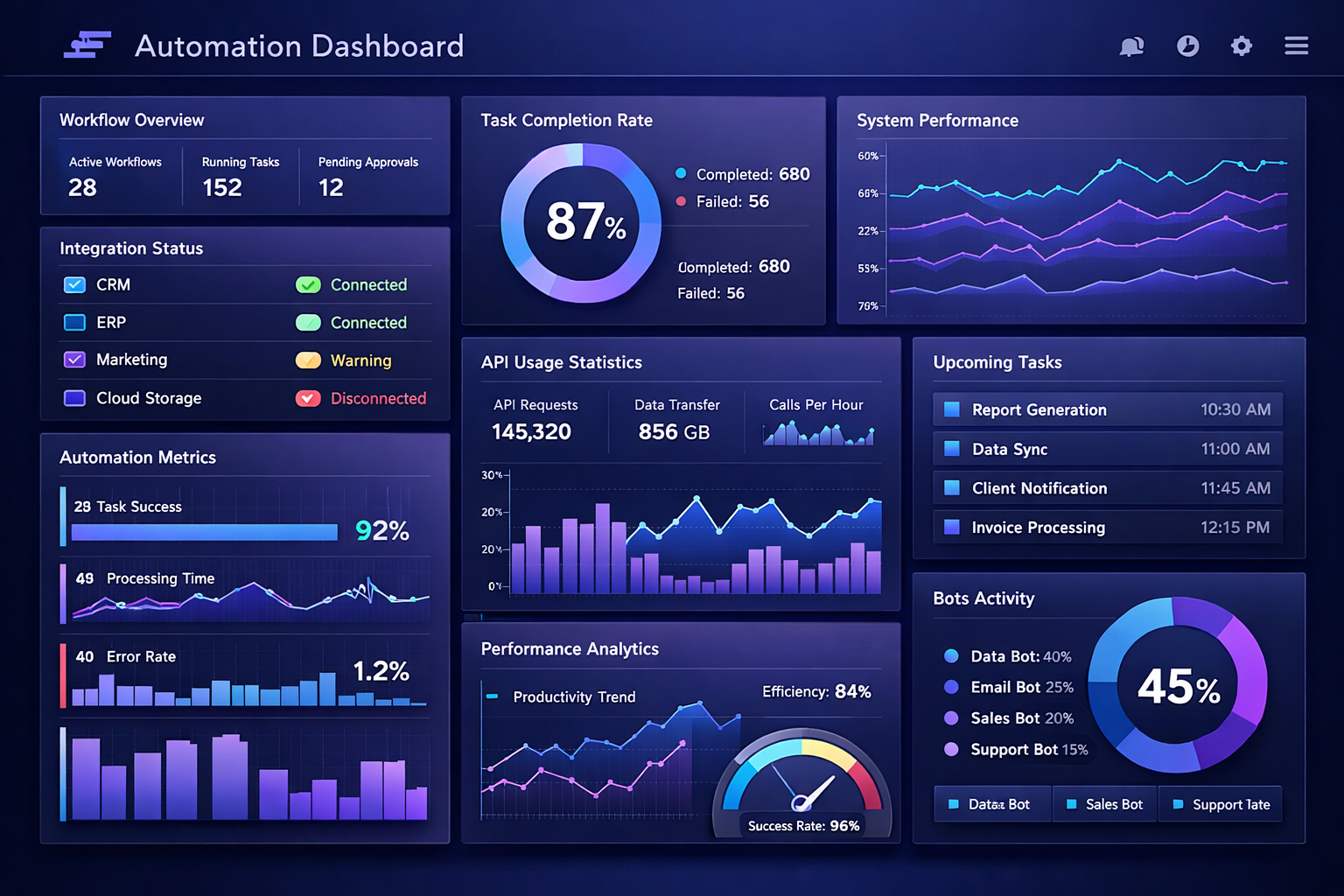
Automation Triggers: Set up intelligent workflows that execute automatically based on predefined conditions. From email arrivals to database changes, Clawdbot detects events and initiates actions instantly.
API & Integrations: Connect Clawdbot with over 500+ popular business applications including Salesforce, HubSpot, Google Workspace, Microsoft 365, Slack, and countless others. The powerful API allows custom integrations for proprietary systems.
Monitoring & Analytics: Real-time dashboards provide complete visibility into your automated processes. Track execution history, identify bottlenecks, and optimize workflows based on actionable insights.
Schedule & Run: Define precise scheduling for recurring tasks. Run automations daily, hourly, weekly, or on custom intervals tailored to your business needs.
Practical Applications: Automation in Action
Clawdbot serves numerous use cases across different industries and departments. Here are key scenarios where organizations see immediate ROI:
Document Processing: Automatically extract data from PDFs, emails, and web forms. Route documents to appropriate departments, update databases, and generate reports without manual intervention.
Customer Relationship Management: Sync customer data across platforms, automatically log interactions, qualify leads based on predefined criteria, and trigger follow-up sequences.
Inventory Management: Monitor stock levels, receive alerts for low inventory, automatically create purchase orders, and update suppliers when thresholds are breached.
Data Synchronization: Maintain consistency across multiple systems by automatically syncing customer records, product catalogs, and pricing information in real-time.
Email & Communication Automation: Sort emails intelligently, auto-respond with relevant information, forward messages to appropriate teams, and create tickets from customer inquiries.
Advanced Features: Maximizing Workflow Efficiency
Conditional Logic and Decision Trees
Clawdbot supports sophisticated conditional logic that allows you to create workflows with multiple pathways. These decision trees enable complex automation scenarios:
IF customer.purchaseAmount > 1000 THEN
    markAsVIP(customer)
    sendWelcomeBonus(customer)
    assignDedicatedAccount(customer)
ELSE IF customer.purchaseAmount > 500 THEN
    markAsPremium(customer)
    sendBonusPoints(customer)
ELSE
    markAsStandard(customer)
    addToStandardProgram(customer)
ENDIF
Data Transformation and Mapping
Transform data formats seamlessly between different systems using Clawdbot's built-in transformation engine:
def transform_customer_data(source_format):
    """
    Transform customer data from source system to target format
    """
    data = {
        'id': source_format.get('cust_id'),
        'name': source_format.get('full_name').title(),
        'email': source_format.get('email_address').lower(),
        'phone': format_phone(source_format.get('phone')),
        'company': source_format.get('org_name'),
        'created_date': parse_date(source_format.get('signup_date')),
        'status': map_status(source_format.get('cust_status')),
        'lifecycle_stage': calculate_lifecycle(source_format.get('purchase_history'))
    }
    return data

def map_status(legacy_status):
    """Map legacy status codes to new system"""
    status_map = {
        'A': 'active',
        'I': 'inactive',
        'S': 'suspended',
        'C': 'closed'
    }
    return status_map.get(legacy_status, 'unknown')
Error Handling and Retry Mechanisms
Robust automation requires intelligent error handling. Clawdbot provides built-in retry logic and fallback mechanisms:
CREATE TRIGGER handle_automation_failure
AFTER automation_job FAILS
BEGIN
    -- Log failure details
    INSERT INTO automation_logs (job_id, error_message, timestamp)
    VALUES (NEW.job_id, NEW.error_message, NOW());

    -- Determine retry policy
    IF NEW.retry_count < 3 THEN
        UPDATE automation_queue
        SET retry_count = retry_count + 1,
            next_execution = DATE_ADD(NOW(), INTERVAL POW(2, retry_count) MINUTE),
            status = 'pending_retry'
        WHERE job_id = NEW.job_id;
    ELSE
        UPDATE automation_queue
        SET status = 'failed',
            escalation_flag = true,
            assigned_to = get_escalation_team()
        WHERE job_id = NEW.job_id;

        -- Send alert notification
        CALL notify_escalation_team(NEW.job_id);
    END IF;
END;
Optimization Strategies: Getting Maximum Value from Clawdbot

To achieve optimal results with Clawdbot, follow these strategic principles:
Start Small, Scale Gradually: Begin with simple, high-impact automations. Automate one business process completely before moving to the next. This approach builds confidence and organizational capability.
Focus on High-Volume Tasks: Target repetitive processes that consume significant time. Data entry, report generation, and email management typically offer the fastest ROI.
Implement Proper Governance: Establish clear ownership of automations. Document each workflow's purpose, triggers, and expected outcomes. Regular audits ensure quality and compliance.
Monitor Performance Metrics: Track automation success rates, cost savings, and time reduction. Use these metrics to identify optimization opportunities and justify continued investment.
Maintain Data Quality: Garbage in means garbage out. Ensure source data is clean and standardized before automation. Implement validation checks within workflows.
Best Practices for Successful Automation Implementation
- Define clear objectives before building: Know exactly what problem you're solving. Measure baseline metrics before and after implementation to quantify improvements.
- Map existing processes thoroughly: Document current workflows in detail. Identify decision points, exceptions, and edge cases that automation must handle.
- Involve cross-functional teams: Include stakeholders from different departments. Their input ensures automation meets diverse needs and considers various perspectives.
- Test extensively before deployment: Use sandbox environments to thoroughly test workflows. Simulate various scenarios including error conditions and edge cases.
- Establish monitoring and alerting: Set up alerts for automation failures. Create dashboards showing real-time status of critical workflows.
- Document everything meticulously: Maintain comprehensive documentation of all automations. Include purpose, inputs, outputs, and troubleshooting guides for support teams.
- Schedule regular reviews: Quarterly audits of automation performance identify optimization opportunities and catch issues before they impact operations.
- Train your team thoroughly: Ensure your team understands how automations work. Provide training on managing workflows and handling exceptional cases.
- Maintain security and compliance: Enforce access controls and audit trails. Ensure automations comply with data protection regulations and organizational policies.
- Plan for scalability: Design automations with growth in mind. Ensure they can handle increased data volumes and transaction complexity.
Conclusion
Clawdbot represents a significant advancement in automation technology, enabling organizations to achieve unprecedented levels of operational efficiency. By automating routine tasks, integrating disparate systems, and providing real-time visibility into processes, Clawdbot allows teams to redirect their focus toward strategic initiatives and innovation.
The journey toward comprehensive automation is not a destination but an ongoing evolution. Start with identifying your highest-impact automation opportunities, implement them using Clawdbot's intuitive platform, and continuously optimize based on results. With the right approach and tools, automation can transform your organization's capabilities and competitive position.
Whether you're looking to reduce operational costs, improve customer experience, accelerate time-to-market, or enhance data accuracy, Clawdbot provides the platform and capabilities to achieve your goals. Visit https://clawd.bot/ to explore how Clawdbot can revolutionize your automation strategy today.